

Palamedes ・ パラメデス
Developed by: Natsume
Published by: HOT-B
Release date: July 6, 1990 (JP) | November 1990 (NA)
Palamedes was a dude in Greek mythology who mucked about in the Trojan War. He got ganked before the war was over because he pissed a bunch of people off by exposing Odysseus (of The Odyssey fame) as a fraud. Odysseus was pretending to be insane to get out of soldier duties, so Palamedes cooked up some scheme that would have Odysseus’ baby son killed to expose that he was, in fact, sane. But that’s par for the course when it comes to mythology, isn’t it? Did anyone NOT attempt to kill a baby in ancient Greece?

Anyway, the guy is credited with plenty of important inventions: the alphabet, numbers, eating three times a day, and dice were all allegedly his bright ideas. If it wasn’t for our boy Palamedes, we’d all be starving to death, unable to read this post, and couldn’t count past one. Worst of all, Palamedes for the NES would have never been made!
Before we get into the game proper, I must introduce you to what might be the ugliest boxart in the entire NES library. Perhaps in the entire history of the medium of video games:
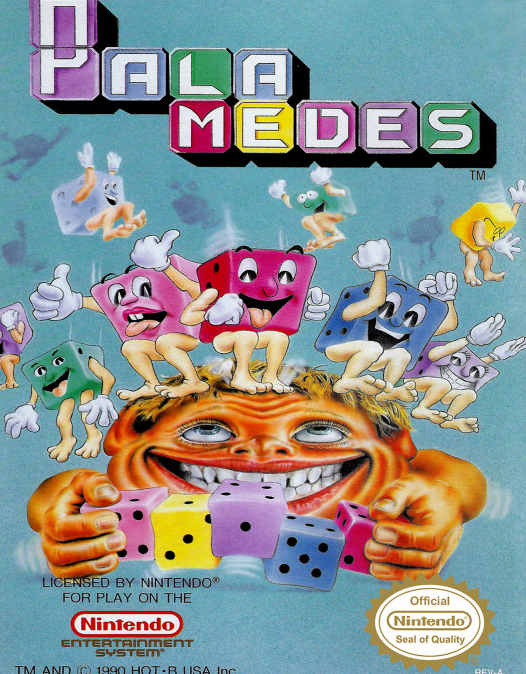
What in the holy mother of all that is goddamn

Okay I want to know what was discussed – or snorted – during the pitch meeting to decide on the North American Palamedes boxart. Palamedes does not house a giant face man who looks like he should be a stalker-type creature in the hottest new indie horror game. The whole thing is giving crazy unlicensed cartoon airbrush art on a carnival ride. Maybe even an ice cream truck. The melting guy in the picture looks a little too happy to be trampled on by all them dice feet. And those dice got their tongues lolling out all willy-nilly. I just don’t like it. I don’t like it at all, no sir. When you see the actual in-game graphics, you’re gonna be even more confused.

Palamedes is a puzzle game you’ve probably never heard of. Even as far as obscure NES games go, this one feels as though it’s fallen through the cracks of time a little harder than most, with extremely little in the way of information, reviews, or anecdotes from people who grew up on it. Even gaming magazines at the time didn’t say a peep about Palamedes; not so much as an ad, or a passing mention from Nintendo Power. Which is surprising to me, considering it was originally a Taito arcade game, and this conversion was handled by Natsume.
Natsume rarely missed in the NES days. I’m happy to report that Palamedes is no exception.
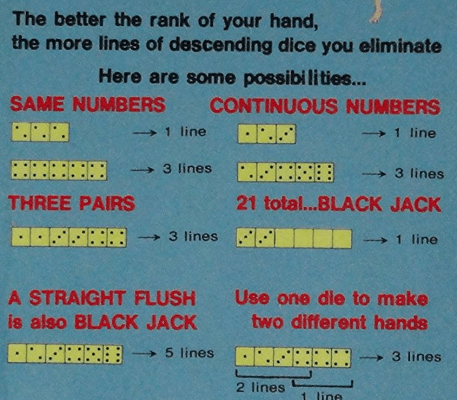
Palamedes is atypical when stacked up (geddit?) against its puzzler contemporaries. Rather than blocks falling from the top of the screen, this is one of those games that has you throwing pieces up towards the top of the screen instead, a la Magical Drop. The blocks are six-sided dice which, need I remind you, were invented by ancient Greek figure Palamedes, full circle moment holy shit. You cycle through each number in order with the B button, and you throw your blocks up at matching blocks to chain together combos, which sit at the bottom of the screen. There are combos based on matching multiples of the same number, putting the blocks in chronological order, matching pairs, and so on. Building these combos and hitting Select clears lines off of your side of the board and puts the same amount of lines onto your opponents board, so the name of the game is to dump more blocks on your opponent before they do the same to you. The more complicated your combo, the better the results.
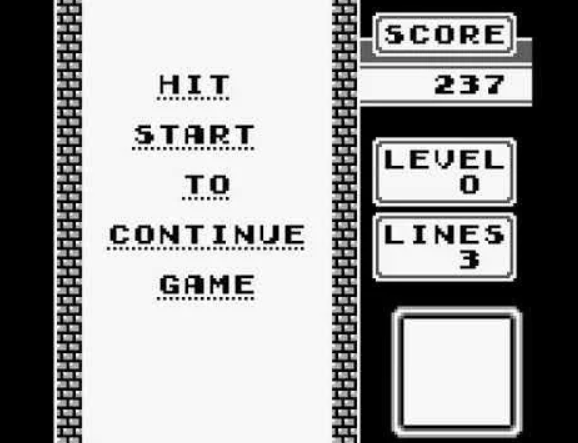
You know how in almost every puzzle game ever made, hitting the pause button blocks your view of the playing field? That way, you can’t stop and think too intensely about your next move, forcing you to play along with the game’s rhythm. This is integral to puzzlers that try and cut a fast pace, especially the ones with ‘versus’ elements. Being able to see your board during a pause would totally destroy the momentum of most games.
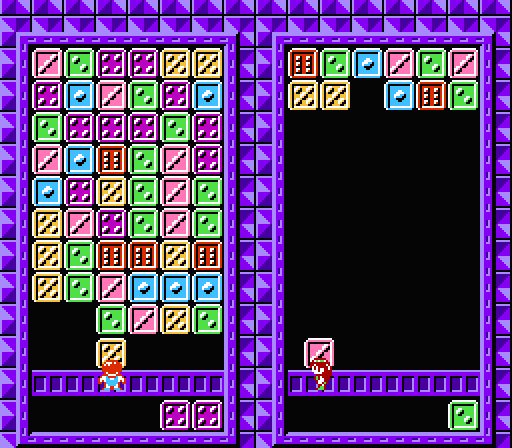
So good news for those who enjoy being dirty cheats in their Nintendo games: Palamedes lets you study the board to your heart’s content while the game is paused. However, could it be classified as cheating if it was an intentional design choice by the developers? I’ll do you one better: do you think it was an intentional design choice at all, or was this whole spiel an oversight? Tetris had only come out a year prior, so puzzle games as we know them today were still in their infancy. The rules weren’t totally set in stone yet, so it’s a hard call to make.
As the mechanics of Palamedes are more complicated than simpler “match 3” or “falling block” style puzzlers, being able to actually take a second and think about your next move is a great boon against the speedy computer opponents. It still took me a few tries to clear the Tournament mode, but I would have been plugging away at Palamedes for a lot longer if not for this…oversight and/or feature.
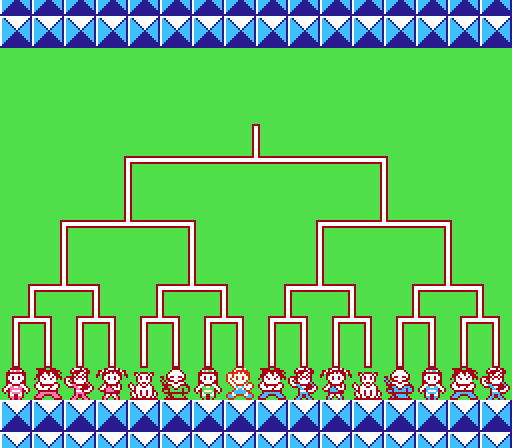
The graphics are cute in a simplistic way, but the music is the audiovisual standout here. I don’t wanna oversell it, but it’s a bit reminiscent of Sunsoft’s earlier NES output. And “this sounds like it could have been in a Sunsoft game” might be the highest compliment you could pay an NES soundtrack. Not Gimmick! or Gremlins 2 levels of perfection, but more along the lines of a perfectly respectable Blaster Master. Good stuff!
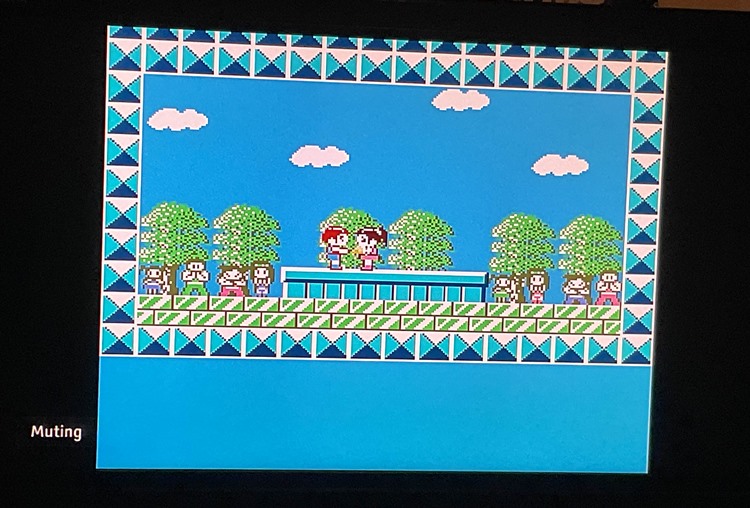
Overall, I had a nice time with Palamedes. It might not break the mold in terms of puzzle games, but it doesn’t overstay its welcome, it’s fun to play once you understand the mechanics, and the music is nice and boppy. And I learned something weird and new about Greek mythology thanks to it. Besides that revolting boxart, what’s not to like? Cartridges are only $13 as of this writing, so check it out and see if it’s your kinda thing!
Final Rating:

 NESJunk
Review request: Astyanax (NES)
LikeLike
…Hold on, just how many NES games were named after figures from the Trojan war?!
(Thank you for reading! 😆)
LikeLiked by 1 person
The game has nothing to do with the Trojan war. Look it up, it was made by the same people who made Totally Rad and it is very similar to that.
Not to be confused with the arcade game from which it is loosely based off, titled “THE Astyanax” (which has a very different story).
I’d love to see you review it.
LikeLike
Palamedes also has absolutely nothing to do with the Trojan war as a game, but both it and Astyanax are titled after mythical figures relating to it. 😉 I thought you were making a historical joke about that, requesting Astyanax on this particular post!
Anyway, thank you again for reading! Every North American released NES game is on the docket for me, so Astyanax will get its due diligence someday soon!
LikeLiked by 1 person